
Layer-2 Blockchains Explained: Why They Matter for Crypto’s Future
For years, blockchain promised a faster, fairer, and more decentralized financial system. But as adoption grew, so did the problems. Networks became slow, transaction fees spiked, and users were forced to choose between speed, cost, and security (Layer-2 blockchains).
This is where Layer-2 blockchains step in. They don’t replace existing blockchains like Ethereum—they supercharge them. And as crypto moves toward real-world adoption, Layer-2 solutions may be the most important infrastructure upgrade yet.
What Are Layer-2 Blockchains, in Simple Terms?
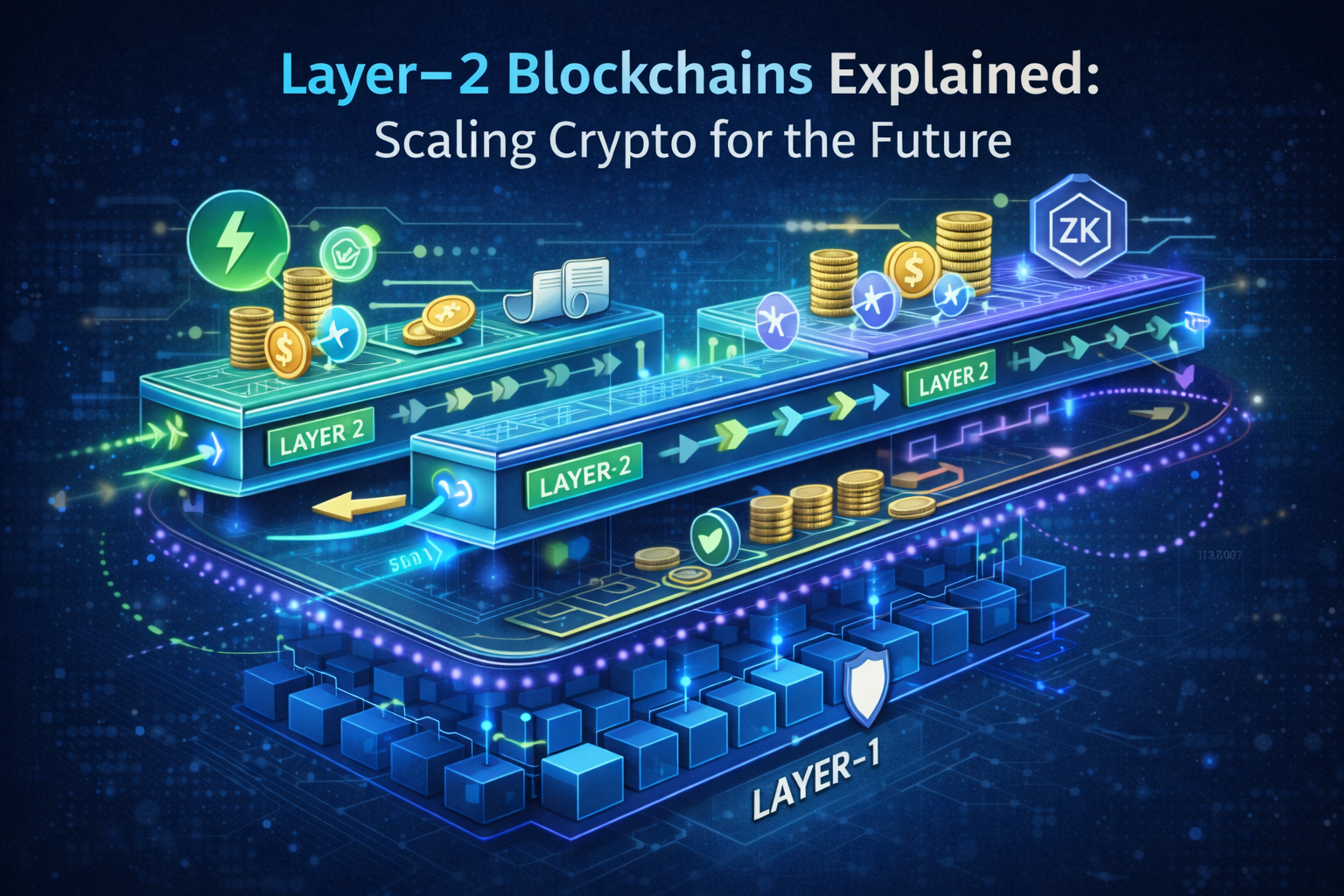
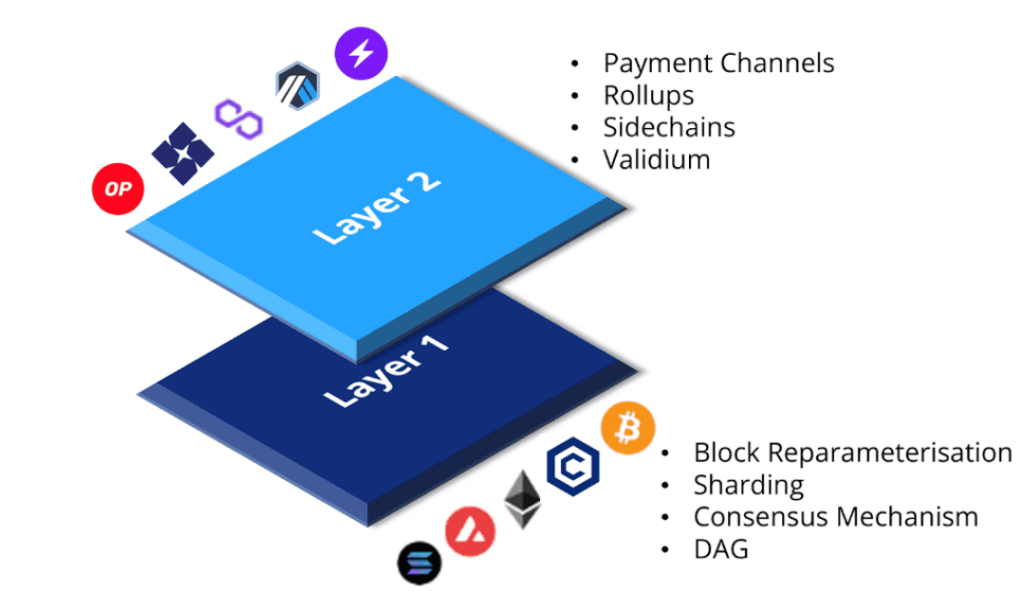
Layer-2 blockchains are systems built on top of an existing blockchain (Layer-1) to handle transactions more efficiently.
Instead of every transaction being processed directly on the main chain, Layer-2 networks handle most activity off-chain and then send the final result back to Layer-1 for security and settlement.
Think of it like this:
Layer-1 is a busy highway.
Layer-2 is a fast express lane that reduces traffic without compromising safety.
Why Layer-1 Blockchains Struggle at Scale
Early blockchains were designed for decentralization and security—not mass usage. As millions of users joined, limitations became obvious.
Some of the biggest challenges include:
- Limited transactions per second
- High gas fees during peak usage
- Slower confirmation times
- Poor user experience for everyday payments
Without scaling solutions, blockchains risk becoming too expensive and inefficient for mainstream use.
How Layer-2 Solutions Actually Work
Layer-2 networks process thousands of transactions independently and bundle them together before submitting a summary to the main blockchain. This drastically reduces congestion and cost.
While there are multiple technical approaches, most Layer-2 systems share the same goals:
- Reduce transaction fees
- Increase speed
- Maintain the security of the underlying blockchain
The result is a smoother, cheaper, and more scalable crypto experience.
Common Types of Layer-2 Solutions
Not all Layer-2s work the same way. Some of the most widely used models include:
- Rollups: Bundle many transactions into one and post them on Layer-1
- Optimistic Rollups: Assume transactions are valid unless challenged
- Zero-Knowledge Rollups (ZK-Rollups): Use cryptographic proofs for instant validation
- State Channels: Enable off-chain interactions with on-chain settlement
Each approach balances speed, cost, and complexity differently.
Why Layer-2 Blockchains Matter So Much
Layer-2s aren’t just a technical upgrade—they are essential for crypto’s survival and growth.
They make it possible for:
- Everyday payments without high fees
- Scalable DeFi platforms
- NFT trading without congestion
- Blockchain-based gaming and social apps
Without Layer-2s, many real-world blockchain use cases simply wouldn’t be viable.
Better User Experience = More Adoption
For most users, crypto is still intimidating. High fees and slow transactions only make it worse.
Layer-2 solutions dramatically improve usability by:
- Making transactions near-instant
- Reducing costs to cents instead of dollars
- Enabling mobile-friendly crypto apps
As friction disappears, adoption becomes more natural—and more sustainable.
The Role of Layer-2s in Crypto’s Long-Term Future
The future of crypto isn’t about one chain replacing another. It’s about ecosystems working together.
Layer-1 blockchains provide security and decentralization.
Layer-2 networks provide speed and scale.
Together, they form the foundation for a global, decentralized digital economy that can actually support billions of users.
Final Thoughts
Layer-2 blockchains may not be flashy like meme coins or viral NFTs, but they are far more important. They solve real problems, enable real applications, and move crypto closer to everyday use – Layer-2 blockchains.
If Layer-1 blockchains are the backbone of crypto, Layer-2s are the muscle that makes it move.
As the industry matures, the success of crypto won’t be measured by hype—but by how seamlessly it works in the real world. And Layer-2 blockchains are leading that charge.
Disclaimer: This article is for informational purposes only and does not constitute financial advice. Always consult with a financial advisor before making investment decisions.
Read more updates and articles on our Crypto category page
#blockchain #Bitcoin #Crypto