


Google Antigravity IDE Explained: What It Is, What It Aims to Do, and Why Developers Are Talking About It
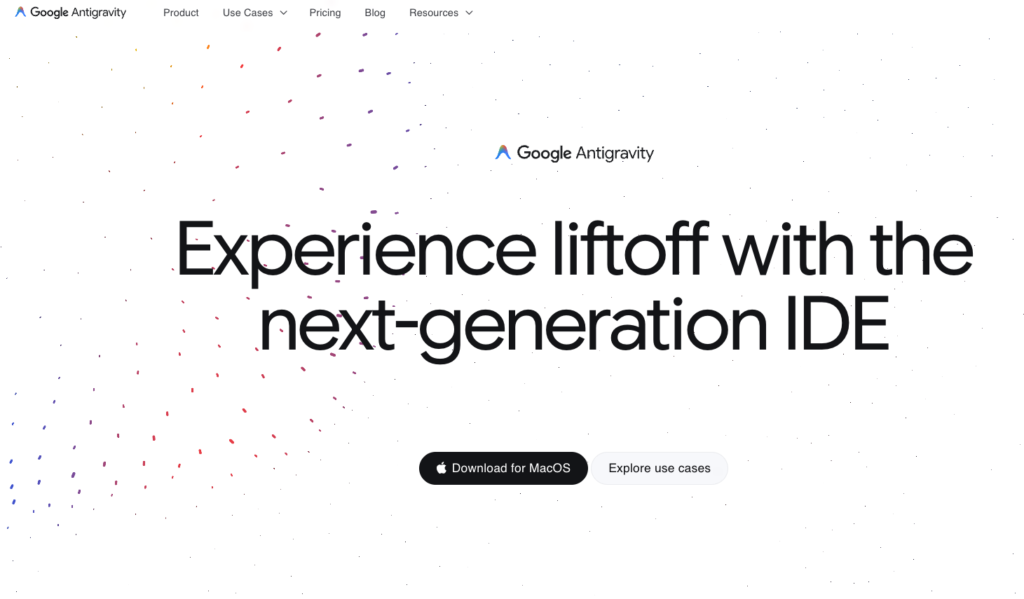
Google has officially launched Google Antigravity IDE, a next-generation, AI-native development environment designed to fundamentally change how software is built – Google Antigravity IDE.
Unlike traditional IDEs that assist developers with syntax and debugging, Antigravity IDE is built around a bold idea:
remove friction from coding entirely and let developers focus on intent, logic, and outcomes.
This marks one of Google’s most ambitious moves in developer tooling to date.
What Is Google Antigravity IDE?
Google Antigravity IDE is an AI-first, cloud-native integrated development environment that combines large language models, automation, and system-level intelligence into a single coding workspace.
Instead of merely helping you write code faster, it aims to:
- Understand what you’re trying to build
- Generate, structure, and optimise code automatically
- Reduce manual setup, testing, and maintenance
In short, it shifts development from code-centric to intent-centric.
Key Features of Google Antigravity IDE
1. Intent-Driven Development
Developers can describe functionality in natural language, and the IDE:
- Generates clean, production-ready code
- Suggests architecture and frameworks
- Adapts code as requirements evolve
This dramatically reduces boilerplate and repetitive tasks.
2. Deep AI Integration at the Core
Antigravity IDE doesn’t treat AI as a plugin — it’s embedded at the foundation.
Capabilities include:
- Real-time reasoning about code logic
- Automatic refactoring and optimisation
- Context-aware suggestions across entire projects
The IDE understands systems, not just files.
3. Built-In Testing, Security, and Performance Checks
The IDE continuously:
- Identifies bugs before runtime
- Flags security vulnerabilities
- Optimises performance bottlenecks
This helps teams ship faster without sacrificing quality.
4. Cloud-Native by Design
No heavy local setup required.
- Runs in the cloud
- Scales automatically
- Integrated with CI/CD pipelines
- Designed for distributed and remote teams
This aligns with how modern software teams actually work.
5. Continuous Learning From Code Patterns
Antigravity IDE improves over time by learning from:
- Large-scale codebases
- Best practices
- Real-world usage patterns
The more it’s used, the smarter it becomes.
Why Google Antigravity IDE Is a Big Deal
1. It Redefines the Role of a Developer
Developers spend less time:
- Writing repetitive code
- Debugging trivial issues
- Managing configurations
And more time:
- Designing systems
- Solving real problems
- Making strategic technical decisions
2. Massive Productivity Gains
Tasks that once took days can be completed in hours.
For startups, enterprises, and solo developers alike, this means:
- Faster prototyping
- Quicker iteration
- Reduced development costs
3. Lower Barrier to Entry for Software Creation
Antigravity IDE enables:
- Non-traditional developers
- Domain experts
- Product teams
to build functional software without deep language expertise.
This democratises software development.
4. A Strategic Move in the AI Tooling Race
With Antigravity IDE, Google positions itself strongly against:
- Traditional IDEs
- Standalone AI coding assistants
By offering a fully integrated, AI-native platform, not just a helper tool.
Who Should Use Google Antigravity IDE?
- Professional developers
- Startups building fast
- Enterprises managing complex systems
- Students learning modern development
- Teams working on cloud-native applications
It’s particularly powerful for large, evolving codebases.
Whats the Final verdict on Google’s New product
Google Antigravity IDE isn’t just another IDE upgrade – Google Antigravity IDE.
It represents a shift in how software is created.
By reducing friction, automating complexity, and elevating human creativity, it points toward a future where coding is less about syntax and more about thinking, design, and impact.
If this is the direction Google is committing to, the developer ecosystem is about to change — permanently.
Also read more articles like this on Learning labs. Check out Prompt Engineering 101: How to Use AI Effectively
#Google #Antigravity #AI #Alphabet