


Prompt Engineering 101: How to Use AI Effectively
Artificial intelligence is powerful — but only if you know how to talk to it.
Think of AI like a highly skilled assistant: it can write, analyze, explain, design, calculate, plan, create, or teach… but only if your instructions are clear. (AI writing techniques)
That’s where prompt engineering comes in.
Prompt engineering isn’t technical. It’s not coding, and it’s not complicated.
It’s simply the art of giving AI the right inputs so you get the best possible outputs.
In 2026 and beyond, prompt engineering is a must-have skill for:
- Students
- Writers & creators
- Marketers
- Developers
- Researchers
- Business owners
- Anyone who uses AI tools
Let’s break it down step-by-step — with examples you can use right now.
What Exactly Is Prompt Engineering?
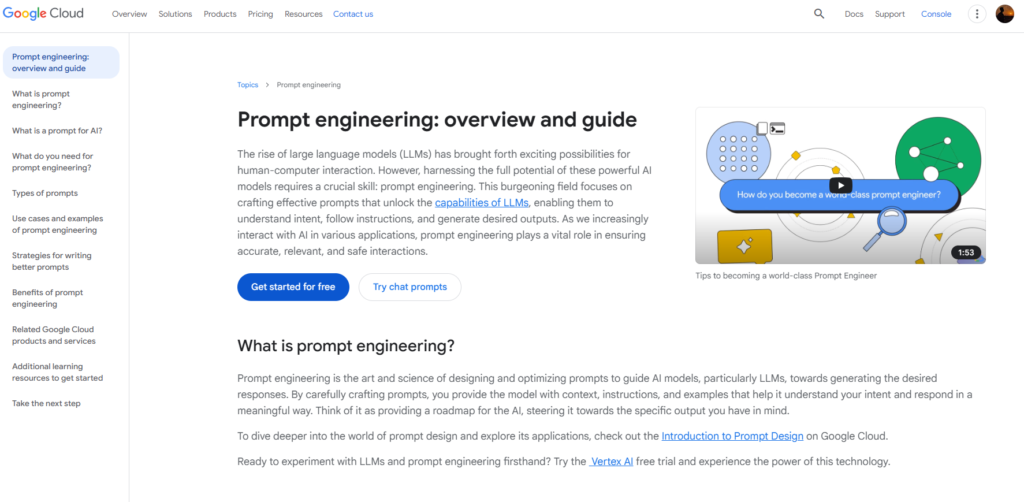
Prompt engineering is the practice of designing clear, structured, and strategic instructions that guide AI tools to produce high-quality, accurate responses.
In other words:
Better prompts = better results.
It’s not about writing long prompts — it’s about writing precise ones.
The Foundation: What Makes a Good Prompt?
A great prompt typically includes:
1. A Clear Goal
What do you want the AI to do?
Example: “Explain blockchain in simple terms.”
2. Context
More context = more accuracy.
Example: “Explain blockchain for a 12-year-old with zero technical knowledge.”
3. Constraints
These limit or shape the output.
Example: “Explain in 100 words.”
4. Format
Tell AI exactly how to present the answer.
Example: “Explain using bullet points.”
When you combine these elements, your results improve instantly.
Prompt Engineering Formula (Use This Every Time)
Here’s a simple formula you can follow:
👉 Role + Task + Context + Format + Constraints
Example:
“You are an expert financial analyst. Summarize today’s stock market trends for beginners in bullet points, under 150 words.”
This formula works for writing, coding, analysis, customer support, marketing, brainstorming — literally everything.
Beginner vs Expert Prompts (Side-by-Side Comparison)
| Weak Prompt | Strong Prompt (Engineered) |
|---|---|
| “Write about solar energy.” | “Write a 200-word beginner-friendly explanation of solar energy, using simple language and real-life examples. End with 3 benefits and 3 challenges.” |
| “Help me plan my day.” | “Act as a personal productivity coach. Create a structured daily plan for a remote worker, including breaks, deep-work blocks, and priority tasks. Output as bullets.” |
| “Fix this code.” | “Act as a senior Python developer. Debug the following script, explain the issue, and provide a corrected version with comments.” |
See how the strong prompt tells the AI exactly what we expect?
That’s the magic.
Popular Prompt Types You Should Master
1. Role-Based Prompts
You assign the AI an identity.
Example:
“Act as a professional nutritionist and create a 7-day meal plan for weight loss.”
Why it works:
AI adapts its tone, expertise, and structure instantly.
2. Step-by-Step Prompts
These break complex tasks into smaller steps.
Example:
“Explain how to start a Shopify store step-by-step for beginners.”
Why it works:
AI gives structured, actionable guidance.
3. Creative Prompts
Perfect for writing, content creation, and design.
Example:
“Write a catchy Instagram caption about productivity using humor and a motivational twist.”
4. Analytical Prompts
Useful for breakdowns, summaries, insights.
Example:
“Summarize the key points of this research and explain the implications in simple terms.”
5. Refining Prompts (The Secret Weapon)
Don’t like the answer? Improve it.
Examples:
- “Rewrite in a more engaging tone.”
- “Make this shorter and punchier.”
- “Add data and real-world examples.”
- “Make it sound more professional/friendly/technical.”
AI improves dramatically when you iterate.
The Golden Rule of Prompt Engineering: Specificity Wins
The more specific your instructions, the less AI has to guess.
And when AI stops guessing, the results become sharper, clearer, and more accurate.
Compare:
❌ “Write a blog post.”
✅ “Write a 600-word SEO-optimized blog post with a strong hook, H2/H3 structure, examples, and a friendly tone.”
That’s the difference between a bland output and something publish-ready.
Advanced Prompt Engineering Tricks (For Pro Users)
1. Use “Few-Shot” Prompting
Give AI examples of the style you want.
Example:
“Write headlines like these:”
- “The Future of AI Is Already Here”
- “Crypto is Changing How the World Trades”
Then add:
“Now generate 10 more in the same style.”
2. Chain-of-Thought Prompting
Ask AI to “show its reasoning.”
Example:
“Think step-by-step and explain your reasoning before giving the final answer.”
Great for logic, planning, and math.
3. Persona Consistency
If you’re writing a series, lock in a persona.
Example:
“For the rest of this conversation, adopt the tone of an upbeat tech influencer.”
4. Multi-Prompt Workflows
Break big tasks into stages:
- Ask AI to brainstorm ideas
- Then refine them
- Then expand
- Then optimize
- Then format
This is how professionals produce high-quality work fast.
Common Prompting Mistakes (And How to Fix Them)
❌ Mistake 1: Too short
“Explain AI.”
Fix: Add context, audience, and format.
❌ Mistake 2: Asking multiple things at once
“Explain crypto, make a chart, write a script, summarize the risks…”
Fix: Separate into steps.
❌ Mistake 3: Not telling AI what tone you want
Professional? Friendly? Simple? Technical?
Tone is everything.
Practical Prompt Templates You Can Steal
Template 1 – Content Creation
“Act as a content strategist. Write a 700-word SEO article about [topic] with a hook, H2/H3 formatting, examples, and a friendly tone.”
Template 2 – Learning Something New
“Teach me [topic] like I’m a beginner. Use simple examples and avoid jargon.”
Template 3 – Business & Marketing
“Create a marketing plan for [business]. Include audience, messaging, channels, timeline, and KPIs.”
Template 4 – Coding Help
“You are an expert developer. Fix the following code and explain the problem in simple terms.”
Final Thoughts: Prompt Engineering Is the Skill of the Future
The people who get the most out of AI aren’t developers — they’re great communicators.
Use this Prompt Engineering Guide below:
Prompt engineering is simply learning how to:
- Think clearly
- Communicate with precision
- Guide AI step-by-step
- Iterate until the output is perfect
Master this skill, and AI becomes your most powerful professional tool — whether you’re creating content, learning, building a business, coding, or problem-solving.
Also read more articles like this. Check out CISSP vs CISM: Which Cybersecurity Certification Is Best for Your Career?
prompt engineering guide, how to use AI effectively, prompt examples, ChatGPT prompts, AI writing techniques, best prompts 2026, AI productivity tips