
Web3 vs Web2: The Technical Shift Developers Can’t Ignore
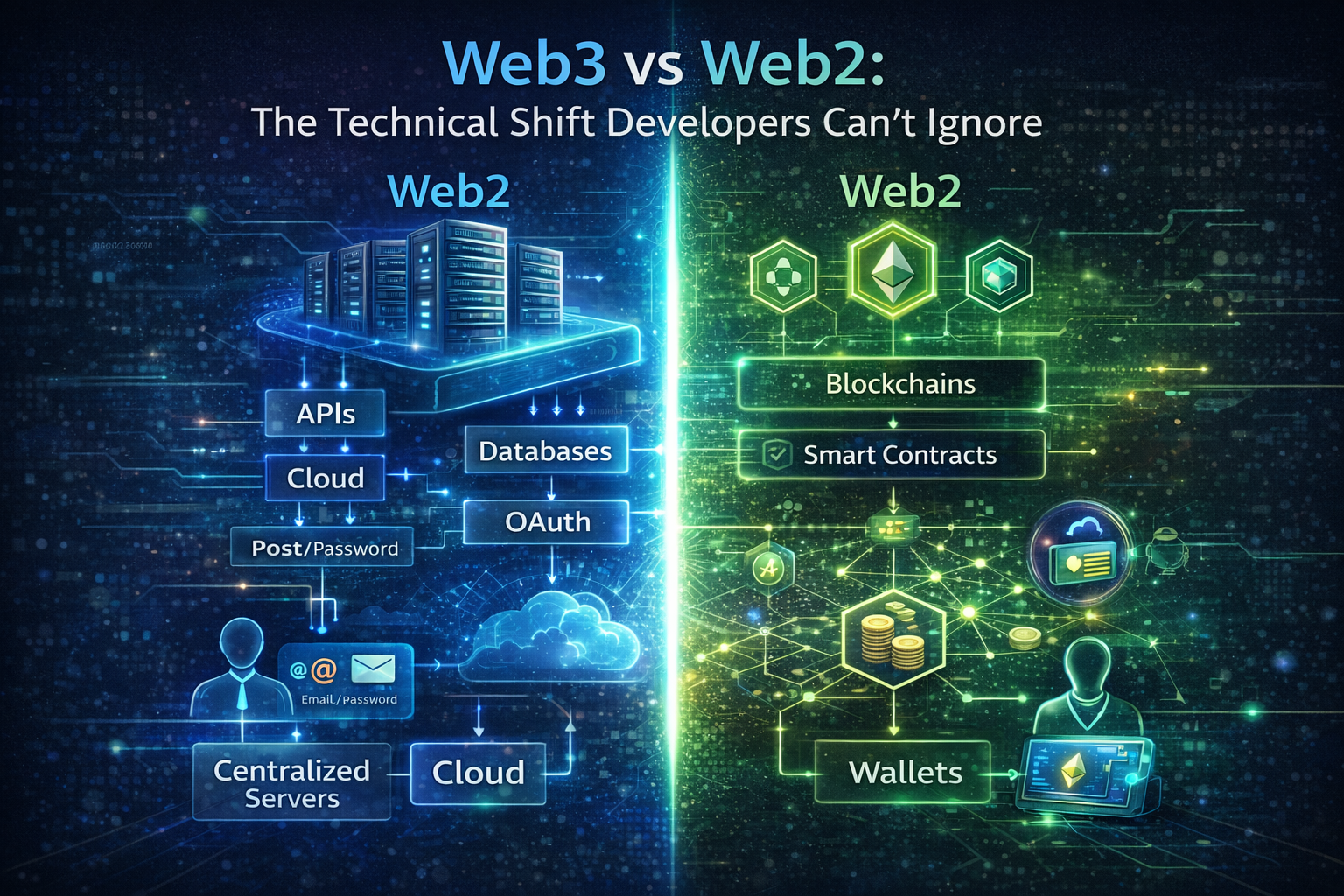
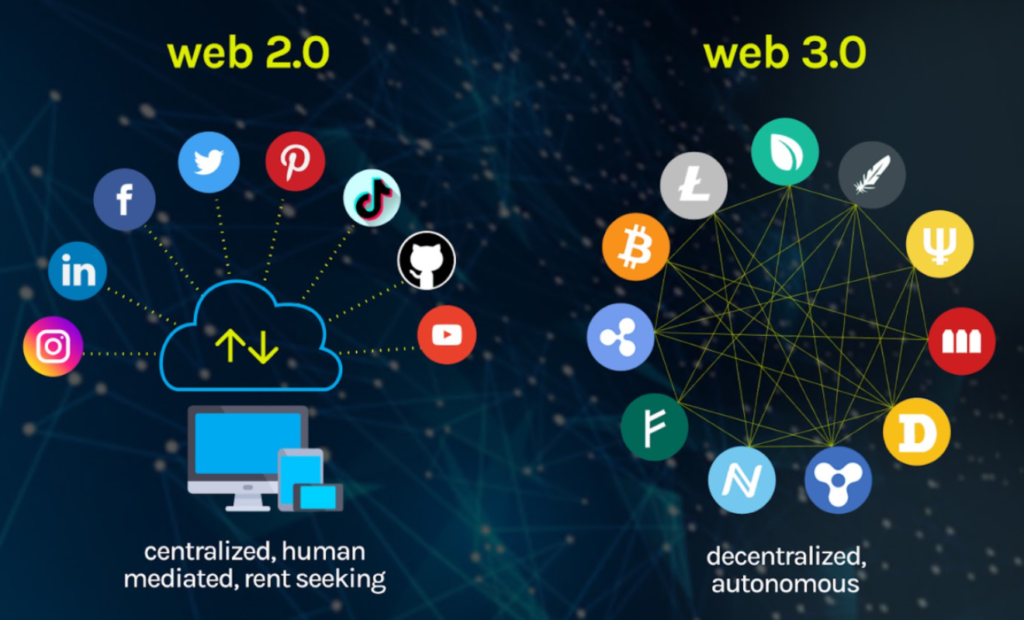
For most developers, Web2 is familiar territory. You build an app, deploy it to the cloud, connect a database, expose APIs, and authenticate users with emails or OAuth. It works—but it also concentrates power in centralized servers and platforms (Web2 vs Web3 architecture).
Web3 challenges that model at a protocol level.
It introduces decentralization, on-chain logic, and user-owned identities. This isn’t just a philosophical shift—it’s a deep technical change that affects architecture, tooling, security, and developer workflows.
Let’s break down what actually changes when you move from Web2 to Web3—and why developers can’t afford to ignore it.
Web2 Architecture: Centralized by Design 🏗️
In Web2, applications follow a well-known pattern. The backend owns the data, business logic, and authentication. Users interact through browsers or mobile apps, but control stays with the platform.
A typical Web2 stack looks like this:
- Frontend built with React, Vue, or Angular
- Backend APIs using Node.js, Django, or Spring
- Databases like PostgreSQL, MySQL, or MongoDB
- Authentication via email/password or OAuth
- Deployment on AWS, GCP, or Azure
This architecture scales well, but it creates single points of failure. If the backend goes down—or the platform changes rules—users are affected instantly.
Web3 Architecture: Protocols Instead of Platforms 🔗
Web3 flips this model. Instead of trusting a central backend, applications rely on blockchain networks and smart contracts as the source of truth.
In Web3:
- Business logic runs on-chain as smart contracts
- Data lives on public or semi-public ledgers
- Users authenticate via cryptographic wallets
- Frontends talk directly to blockchains or RPC nodes
The backend doesn’t disappear—but it becomes thinner. The protocol does the heavy lifting.
Identity: Accounts vs Wallets 🔐
One of the biggest technical shifts is identity.
In Web2, identity is platform-owned. Passwords, sessions, and tokens are stored and managed by servers. In Web3, identity is user-owned and based on public–private key cryptography.
This changes how developers think about:
- Authentication (wallet signatures instead of passwords)
- Authorization (on-chain permissions)
- User sessions (stateless by default)
From a dev perspective, this reduces liability—but increases responsibility around key management and UX.
Data Storage: Databases vs Distributed State 📦
Web2 apps rely heavily on mutable databases. Records can be edited, deleted, or migrated freely.
Web3 data is different:
- On-chain data is immutable or append-only
- Storage is expensive and must be optimized
- Off-chain storage (IPFS, Arweave) is commonly used
Developers must carefully decide what belongs on-chain and what doesn’t, balancing cost, performance, and trust.
Logic Execution: Servers vs Smart Contracts 🧠
In Web2, business logic runs on servers you control. Bugs can be patched quickly.
In Web3, logic is deployed as smart contracts:
- Code is public and verifiable
- Updates require migrations or governance
- Bugs can be permanent and costly
This forces developers to adopt:
- Stronger testing practices
- Formal audits
- Simpler, more defensive designs
The upside? Logic becomes transparent and trustless.
APIs vs RPC Calls 🔌
Web2 developers are used to REST or GraphQL APIs.
Web3 introduces a different interaction model:
- JSON-RPC calls to blockchain nodes
- Event-driven architecture via logs
- Indexing layers for performance
Instead of querying a database, you often query state derived from the blockchain which changes how apps are designed and optimized.
Security Model: Perimeter vs Protocol 🛡️
Web2 security focuses on protecting servers—firewalls, access controls, and patches.
Web3 security is protocol-centric:
- Smart contract exploits are public and irreversible
- Key theft equals asset loss
- Security bugs become economic attacks
This makes security a core design concern, not an afterthought.
Why This Shift Matters for Developers 🚀
Web3 isn’t replacing Web2 overnight—but it’s redefining what applications can do.
For developers, this shift means:
- Learning new paradigms, not just new tools
- Designing for decentralization and adversarial environments
- Building systems that minimize trust assumptions
The most valuable engineers in the next decade will understand both worlds and know when to use each.
Final Thoughts
Web2 optimized for speed and convenience. Web3 optimizes for trust and ownership (Web2 vs Web3 architecture).
From a technical perspective, Web3 is harder—but also more powerful. It forces developers to think at the protocol level, not just the application layer.
Ignoring this shift doesn’t make it go away.
Understanding it puts developers ahead of the curve 💡
Also read our article on – Hostinger vs Bluehost vs GoDaddy (2026 Comparison): Best Web & WordPress Hosting Reviewed
#Web3 #web2 #blockchain #Developers #decentralisation